


Theodore von Kármán
Theodore von Kármán was a Hungarian-American mathematician, aerospace engineer, and physicist who was active primarily in the fields of aeronautics and astronautics. He was responsible for many key advances in aerodynamics, notably on supersonic and hypersonic airflow characterization.
Von Kármán was the third of five children of a Jewish professor. Von Kármán showed a natural mathematical facility at an early age and was well on his way to becoming a child prodigy, his father, guided him toward engineering. After graduating in 1902 he moved to the German Empire and joined Ludwig Prandtl at the University of Göttingen, where he received his doctorate in 1908. He taught at Göttingen for four years. In 1912 he accepted a position as director of the Aeronautical Institute at RWTH Aachen University. .Von Kármán’s interest in aerodynamics was piqued while he visited Paris in 1908 and observed a short flight by Henry Farman in a test airplane. In his aerodynamics research,further helped establish the improved stability and functionality of swept-back wings.In 1911, he made an analysis of the alternating double row of vortices behind a bluff in a fluid stream, now famous as Karman’s Vortex Street, which occur when the air stream that flow around a body fails to stick to the shape, but instead breaks off behind it into a wave. This wave is a form of drag that tries to keep the object from flying, or cause damage. His time at RWTH Aachen was interrupted by service in the Austro-Hungarian Army from 1915 to 1918, when he designed the Petróczy-Kármán-Žurovec, an early helicopter
He first visited the United States in the Fall of 1926 to consult with the Douglas Aircraft Company on the establishment of a new graduate school at the California Institute of Technology Aeronautical Lab. Four years later he returned as director of the school and his laboratory became the most prominent in the world of aeronautical sciences. It later became the present NASA Jet Propulsion Laboratory and he directed America’s first governmental long-range missile and space-exploration research program for the U.S. Ordnance Department. In 1936, he supported the subject of rocket propulsion and its applications. Two years later the U.S. Army Air Corps sponsored a project at his lab on the use of rockets to provide super-performance for conventional aircraft.
By the end of his distinguished career, he had published more than 200 papers, advanced scientific collaboration from world leading scientists, developed many unique theories of aeronautical and space science, and played an important role in the creation of supersonic aircraft and ballistic missiles. In 1963, he was awarded the first National Medal of Science by President John Kennedy.
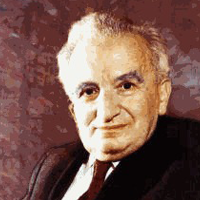
Theodore von Kármán
Date of Birth: 11 May 1881
Birth Place: Budapest, Hungary
Proffession: Mathematician
Nationality: Germany
Death: 6 May 1963, Aachen, Germany