


Rangarajan Kumaramangalam
Phanindranath Rangarajan Kumaramangalam was a prominent politician of the Indian National Congress and later the Bharatiya Janata Party and a Member of parliament, Lok Sabha from the Salem constituency from 1984 to 1996 and Tiruchirapalli constituency from 1998 to 2000.
He served as the Minister of State for Law, Justice and Company Affairs in the P. V. Narasimha Rao government from July 1991 to December 1993 and as the Union Minister for Power in the Vajpayee Government from 1998 to 2000. He was the grandson of former Chief Minister of Madras, P. Subbarayan and the nephew of former Indian Chief of Army, General P. P. Kumaramangalam. Rangarajan was born in the Zamindari family of Kumaramangalam, in Tiruchengode Taluk, Namakkal District. Rangarajan’s father Mohan Kumaramangalam was an important theorist and organiser of the undivided Communist Party of India and later switched to Indian National Congress influenced by the socialist policies of then Prime Minister Indira Gandhi and served as Union Cabinet Minister for Steel & Mines in her cabinet. His mother Kalyani Mukherjee was the niece of Ajoy Mukherjee, Chief Minister of West Bengal, and of Biswanath Mukherjee, husband of the communist ideologue and parliamentarian Geeta Mukherjee. Ranga was deeply involved in student politics right from the earliest stages By 1973, he had also been elected a member of the All India Congress Committee. In 1977, on obtaining a degree from Kirori Mal College, Delhi University, he moved to Madras to practice in labour law. When the Congress was re-elected in 1980, Rangarajan was asked by his very dear friend, soon-to-be-Prime Minister Rajiv Gandhi, to play an active role in politics. He contested and won the 1984 elections from Salem Lok Sabha constituency. P.V. Narasimha Rao appointed him Minister of State for Law, Justice and Company Affairs in July 1991. Despite his personal sense of loyalty to Narasimha Rao, Ranga was unable to support him in what was increasingly being seen as a corrupt Congress regime. In late 1993, Rangarajan resigned as Cabinet Minister. In May 1995, Rangarajan resigned from the primary membership of the Indian National Congress. In December 1997, Rangarajan joined the Bharatiya Janata Party. He won from the Tiruchirapalli Lok Sabha constituency in 1998 and 1999 and became one of the torch-bearers of the BJP in Tamil Nadu. He served with distinction as the Union Minister for Power and Parliamentary Affairs, holding additional charge of Law, Justice and Company Affairs, and Mines, in the Second Vajpayee Ministry from 1998 to 1999 and in the Third Vajpayee Ministry from 1999 until his death in 2000. One of the most charismatic and brilliant leaders in post independent India, Ranga was loved and respected across party lines. His capacity to get bills passed in parliament was unmatched, because of this unique quality. Additionally, he was one of that rare breed of Indian leaders who delivered on his promises, never forgetting the welfare of the common rural Indian, and the farmer, while, simultaneously, propelling mega power projects forward with matchless administrative and managerial capability. Rangarajan died on 23 August 2000 at the All India Institute of Medical Sciences at the age of 48 as a result of acute myeloid leukaemia
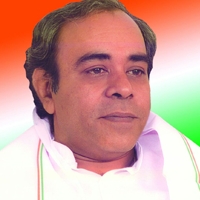
Rangarajan Kumaramangalam
Date of Birth: 12 May 1952
Birth Place: India
Proffession: Politician
Nationality: Indian
Death: 23 August 2000, New Delhi